How Does My SolarEdge Battery Work?

How Does My Battery Work?
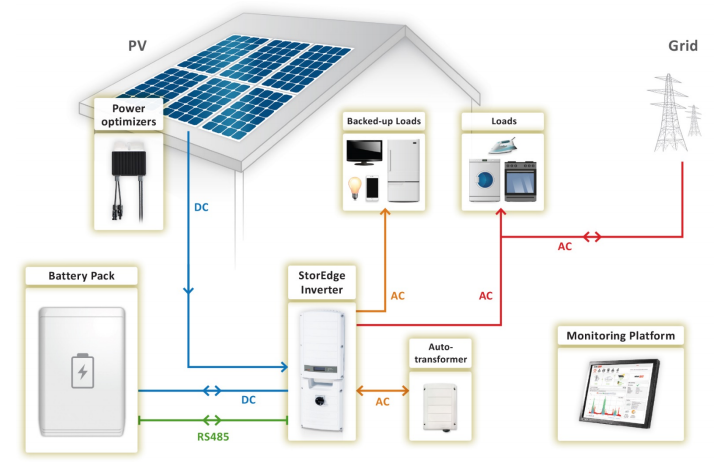
How does my solar work with my battery?
The excess energy your solar panels produce first charges the battery and then is exported to the grid. It is important that we charge from your solar system so in the event of a power outage, you use the battery for backup power while charging it from your solar.
What happens when there is a power outage?
Think of the battery and the solar as two separate items: one item is your solar inverter and the other item is your battery. We re-wire your back-up loads so they are always powered through the inverter. Your inverter is also wired to the grid and to your battery. In the event of a power outage, the inverter senses the loss of grid power and acts like an automatic transfer switch for a generator; it disconnects itself from the utility and connects to the battery.
By law, we are required to prevent your solar power and battery power from going back onto the grid as it could injure a lineman performing repairs. During a power outage, the battery will discharge to power your back-up loads while the solar panels charge the battery. Once the battery is fully charged, the battery does not need to be recharged unless it is being discharged to power your back-up loads.
What happens when power is restored?
The solar inverter will sense the utility power has been restored and will automatically disconnect the back-up loads from the battery and reconnect to the grid, enabling normal solar production and battery charging.
Is there anything I need to do during a power outage?
There could be a benefit to turning off the devices or circuits on the back-up loads to save battery power if you have something critical you want to run rather than something less critical.
For example, turning off garage lighting will save battery power for a refrigerator.
We suggest enabling the “ECO” mode or “Energy Saver Mode” for any appliances on your back-up loads in the event of a power outage.
If you are experiencing a tripped breaker on a backup circuit, try powering off all loads, turning on the highest power load only (usually a refrigerator or motor with an initial large power spike to turn on, and then turning on your additional loads. Of course, ECO mode on major appliances is highly recommended. If this fails to remedy the issue, please contact us for support!